Section # 2 Facings (Primarily from Crowfoot et al) Modern facings use the following techniques: They are cut from a piece
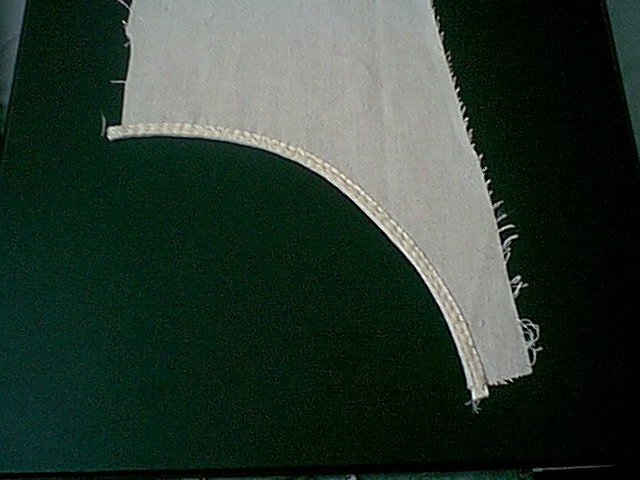
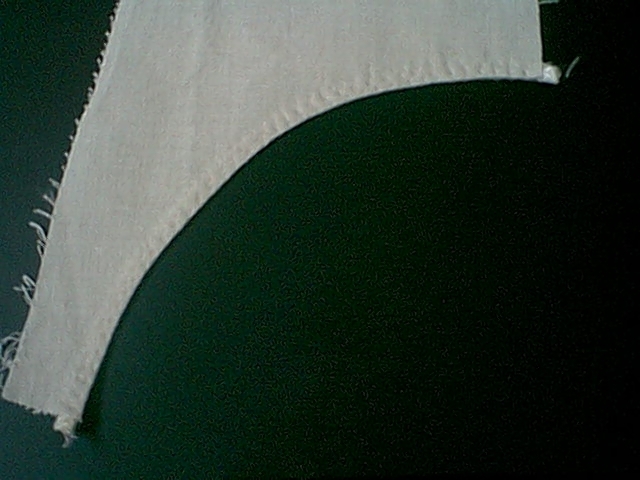
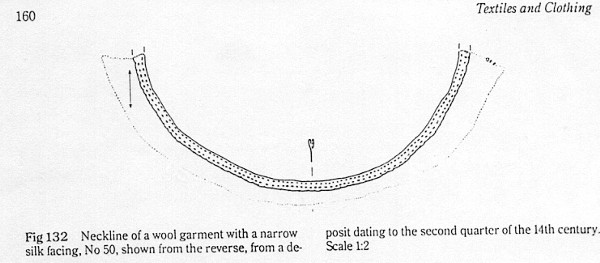
of self fabric, along the same grain lines as the garment about Period facings use the following techniques: They are cut from tabby woven silk fabric (or possibly silk ribbon) that is 5 mm to 25 mm wide. They are sewn to the folded edge created by turning the seam allowance of the edge to be faced over by 3-5 mm. The facing may have between 1 and 3 rows of stitching holding it in place. Lastly, it is hemstitched all around to prevent fraying and to keep the edge in place.
Note on fabrics for facings: The digs in London have only uncovered straight- grain tabby woven facings. I have used strips cut from the same cloth as the garment to finish the edges if the fabric is not very thick (linen, raw silk, and fine wool). Strips cut along the selvedge work particularly well, since you don't need to worry about the edges fraying. I don't know how well twill or satin woven ribbon would work, but will look in to it. NO BIAS TAPES have been found.
|